

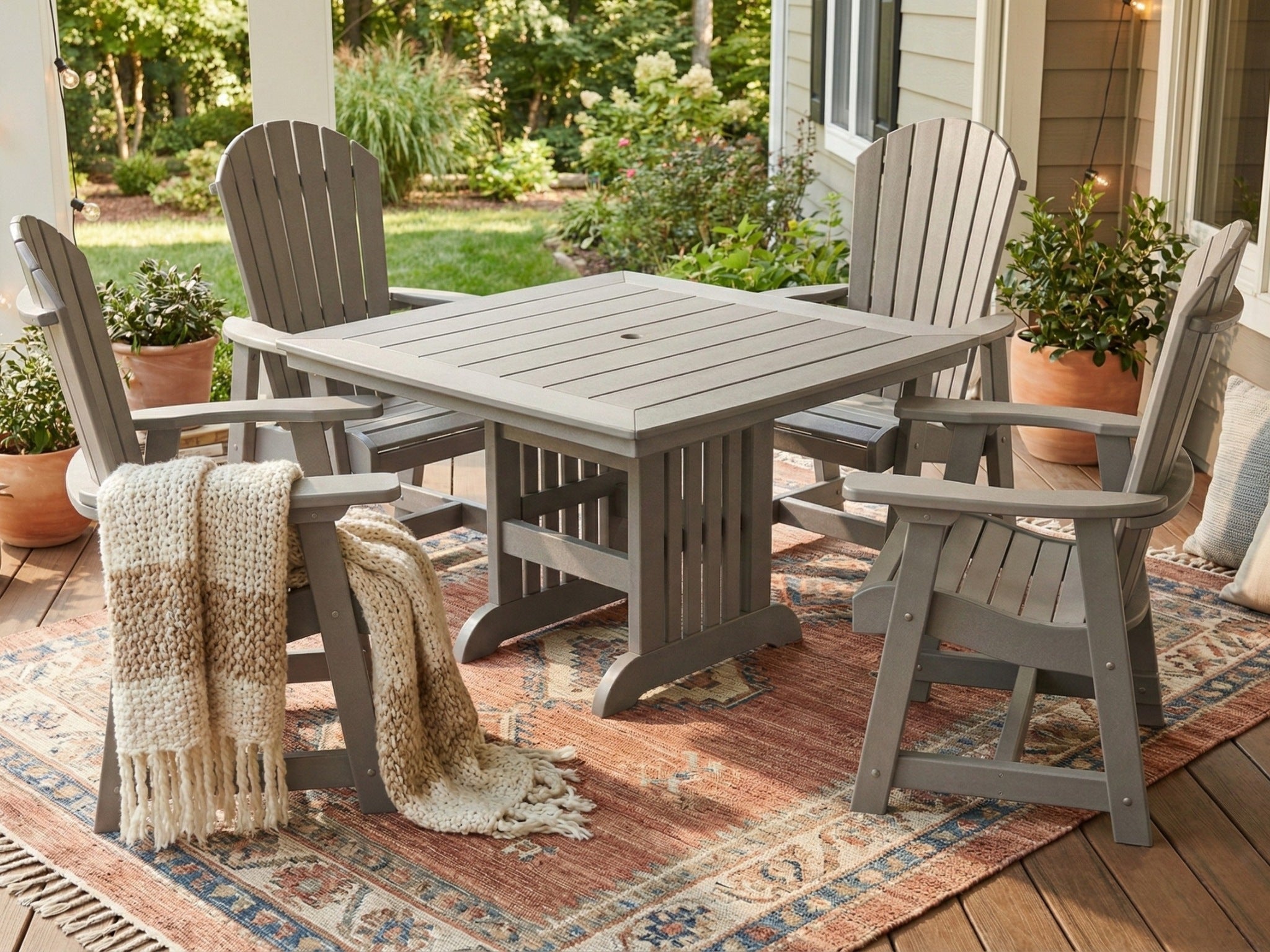
What Is Mission Style Furniture? What “Mission” Means in Furniture Terms
If you have ever wondered what does mission mean in furniture terms, the short answer is this: mission furniture is a style defined by clean lines, simple forms, sturdy construction, and a timeless look that prioritizes function over ornament. In other words, mission style furniture is furniture that looks strong, practical, structured, and classic rather than overly decorative.
Today, people search for terms like mission furniture, mission style furniture, mission outdoor furniture, and what is mission furniture when they want a look that feels substantial, refined, and built to last. That is a big reason the mission look continues to translate so well into premium poly outdoor furniture.
What Does Mission Mean in Furniture Terms?
In furniture terms, mission refers to a style known for:
Straight vertical and horizontal lines
Flat panels and slatted details
Minimal ornamentation
Solid, honest construction
A practical, handcrafted appearance
So when someone asks, what does mission mean in furniture terms, they are really asking about a furniture style that values simplicity, craftsmanship, and durability. Mission style furniture is meant to look grounded and architectural. It is not fussy. It is not overly curvy. It is not flashy. Instead, it is balanced, strong, and timeless.
What Is Mission Style Furniture?
Mission style furniture is often associated with simple geometry, visible structure, and a no-nonsense design philosophy. Historically, the style became known for its rectilinear forms, slats, flat surfaces, and emphasis on craftsmanship. That is why people also search for mission furniture meaning, mission furniture definition, and what is mission style furniture.
The easiest way to recognize mission furniture is to look for a piece that feels sturdy and orderly. A mission chair, mission bench, or mission table usually has a strong frame, clean edges, and a silhouette that feels intentional rather than ornate. The beauty comes from proportion and craftsmanship, not excessive decoration.
Key Features of Mission Furniture
If you are trying to identify mission furniture, these are the main characteristics to look for:
1. Straight Lines
Mission style furniture is known for straight horizontal and vertical lines. This gives it a crisp, architectural look that works in both traditional and modern spaces.
2. Slatted or Paneled Design
Many mission furniture pieces feature slats, rails, or flat panels. These details create a structured appearance that is one of the clearest signatures of the style.
3. Simple, Uncluttered Forms
Unlike heavily carved or ornate furniture, mission style furniture keeps the design clean. The style is understated, which is exactly why it has remained popular for so long.
4. A Strong, Substantial Feel
Mission furniture usually looks durable and stable. Even when adapted into modern materials, the style still communicates permanence and quality.
5. Craftsmanship-Driven Appeal
A big part of the mission furniture meaning is the idea of honest construction. Buyers who like mission style often appreciate furniture that feels handmade, durable, and built with intention.
Mission Furniture vs. Craftsman Furniture
People often compare mission furniture and craftsman furniture. The two are closely related, and many shoppers use the terms almost interchangeably. Both styles value simplicity, quality materials, strong construction, and a handcrafted look.
That said, when people search mission style furniture, they are usually looking for the clean-lined, slatted, rectilinear appearance most closely associated with the mission look. If your goal is a patio or outdoor dining area that feels classic, elevated, and structured, mission outdoor furniture is often exactly the right fit.
Why Mission Style Works So Well for Outdoor Furniture
The reason mission style outdoor furniture works so well is simple: the design language naturally complements outdoor living. Clean lines look polished on a patio. Slatted details feel airy without looking flimsy. And the substantial shape of mission furniture makes outdoor spaces feel more finished and intentional.
That is especially true when the mission look is paired with all-weather poly. With poly mission furniture, you get the visual appeal of structured, timeless design combined with the durability needed for outdoor use. For shoppers who want a classic silhouette without constant maintenance, mission style outdoor furniture is an easy choice.
If you are browsing for that look, the Seabreak Collection is a strong place to start, especially if you like a clean-lined coastal dining aesthetic with mission-inspired forms.
Mission Furniture in Modern Outdoor Spaces
One reason mission style furniture remains relevant is that it blends well with many design directions. It can work in a classic setting, a farmhouse setting, a coastal setting, or even a more modern outdoor layout. The style is versatile because it is based on proportion and structure rather than trend-heavy details.
For example, a Round Mission Table from Beaver Dam brings the recognizable mission look into an outdoor dining setting with durable poly construction and a clean silhouette that feels both timeless and current.
That is why shoppers looking for mission dining furniture, mission patio furniture, or mission style outdoor dining furniture are often drawn to pieces that combine classic lines with modern performance materials.
Who Should Buy Mission Style Furniture?
Mission furniture is a great fit for buyers who want:
A timeless design instead of a trendy one
Furniture that feels sturdy and substantial
Simple lines that look clean and elevated
A handcrafted or heirloom-inspired aesthetic
Outdoor furniture that looks refined without being fussy
If that sounds like your style, mission style furniture is worth serious consideration. It offers a balance of simplicity and presence that works beautifully in outdoor dining spaces, patios, porches, and poolside seating areas.
Why Shoppers Search “What Does Mission Mean in Furniture Terms?”
Many shoppers see words like mission bench, mission table, or mission dining set and want to know exactly what that means before they buy. That is understandable. The word mission is a style descriptor, and knowing the style helps shoppers understand the overall look they can expect.
When a product includes the word mission, it usually signals a design with clean lines, structured proportions, and classic slatted details. In practical terms, it tells you the furniture is likely to feel timeless, sturdy, and visually grounded.
Shop Mission-Inspired Outdoor Furniture at Beaver Dam Shop
If you are drawn to the clean, classic look of mission style furniture, Beaver Dam Shop offers premium poly outdoor furniture that brings that style into outdoor living. Whether you are building a dining area, furnishing a porch, or upgrading a patio, mission-inspired pieces can give your space a polished and lasting look.
Explore mission-inspired options in the Seabreak Collection, browse the Round Mission Table, or shop Beaver Dam Shop’s premium poly outdoor furniture to find a style that fits your space.
Final Answer: What Does Mission Mean in Furniture Terms?
Mission means a furniture style defined by straight lines, simple design, slatted or paneled details, sturdy construction, and timeless craftsmanship. If you like furniture that feels classic, durable, and clean rather than ornate, mission style furniture is likely the look you are after.
FAQ About Mission Furniture
Is mission furniture traditional or modern?
Mission furniture is traditional in origin, but its clean lines make it work very well in modern spaces too. That is one reason mission style furniture still feels relevant today.
What is the difference between mission furniture and modern furniture?
Mission furniture is typically more substantial and craftsmanship-driven, while modern furniture can be sleeker or more minimal in a different way. Mission style usually emphasizes structure, slats, and a handcrafted look.
Is mission style good for outdoor furniture?
Yes. Mission style outdoor furniture works especially well because the clean lines and strong forms look polished outdoors, and the style pairs beautifully with durable poly materials.
Why is mission furniture so popular?
Mission furniture remains popular because it is timeless, versatile, sturdy, and easy to coordinate with many spaces. It offers a classic look without excessive ornamentation.


