

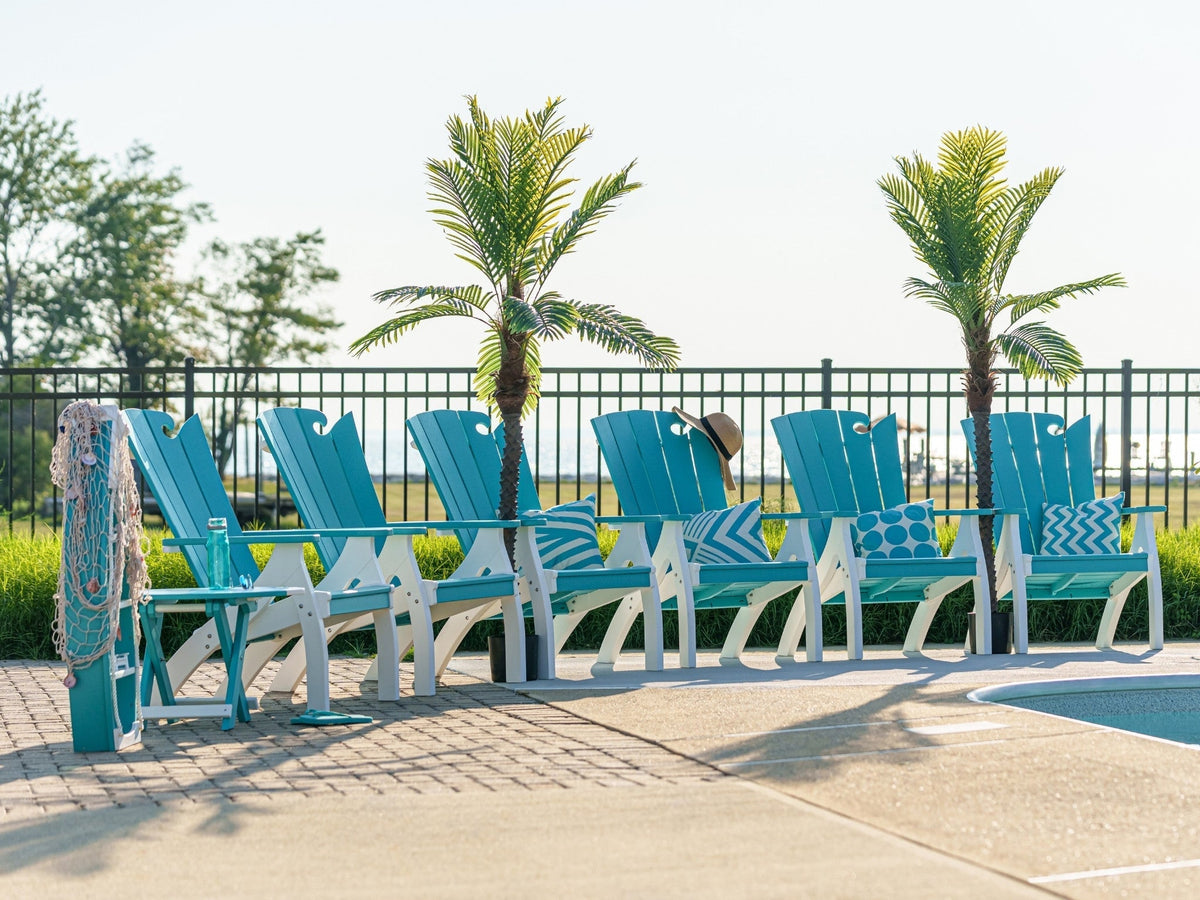
HDPE outdoor furniture is made from high-density polyethylene, a plastic used in products that range from milk and water bottles to durable goods such as furniture.[121] For poly-lumber furniture, manufacturers form plastic into boards, cut the parts, and fasten them into chairs, tables, benches, and other outdoor pieces.
The first distinction saves a lot of confusion: HDPE is a material. POLYWOOD is a brand that makes its proprietary lumber from HDPE.[39] A chair can be made from HDPE without being a POLYWOOD product.
What HDPE, poly lumber, and composite mean
These labels overlap, but they do not mean exactly the same thing.
| Term | Plain-English meaning | What to verify |
|---|---|---|
| HDPE | High-density polyethylene, a specific plastic resin | Whether the exact product uses HDPE |
| Poly lumber | Boards made from plastic and used much like wood lumber | The resin, recycled-content claim, color, texture, and board construction |
| Recycled plastic lumber | Lumber made with reclaimed plastic feedstock | The percentage, certification, and product line covered by the claim |
| Composite lumber | A broad term that may describe plastic blended with wood fiber or other reinforcement | The actual ingredients rather than the word "composite" |
| POLYWOOD | A furniture brand whose proprietary lumber is made from HDPE | The specifications and warranty for the exact POLYWOOD item |
"Poly lumber" is not one universal recipe. Tangent describes several categories of recycled plastic lumber, including nearly homogeneous HDPE lumber, wood-filled material, mixed-plastic lumber, and fiber-reinforced products.[102] That is why the material line on a product page matters more than a broad phrase such as "poly" or "recycled plastic."
Is HDPE good for outdoor furniture?
HDPE is a practical outdoor-furniture material when you want resistance to moisture and routine care that does not involve sanding or staining. Material suppliers describe HDPE as resistant to weather, moisture, rot, and insects.[102][109] A Beaver Dam Outdoor chair made with Tangent poly, for example, can be cleaned with soap, water, and a soft-bristle brush.[118]
There are tradeoffs. HDPE expands when temperatures rise, so board dimensions, bracing, fasteners, and joint design matter.[109] The surface also looks and feels different from natural wood. Color, texture, weight, price, and stiffness vary by product, which makes a sample and the exact specifications more useful than a category-wide promise.
| A reason shoppers choose HDPE | A detail still worth checking |
|---|---|
| It does not need paint or stain as routine upkeep | Cleaning instructions and approved products vary by manufacturer |
| It resists moisture and does not rot like wood | Cushions, slings, hardware, and moving parts may have different care needs |
| Color can run through the board rather than sitting only on the surface | Dark colors and different finishes can look and feel different in direct sun |
| Recycled content is available from some manufacturers | Percentages and certifications must match the exact material line |
| Substantial boards can make a piece feel stable | Weight, joinery, bracing, and assembly quality still vary |
The material is only part of the chair. Good hardware cannot rescue an uncomfortable seat, and HDPE boards do not make loose joinery or poor assembly disappear.
HDPE and POLYWOOD are not the same thing
POLYWOOD says its lumber is made from recycled and reusable HDPE.[39] Other furniture makers also use HDPE, sometimes under a proprietary lumber name. Some brands use more than one synthetic material across their catalog.
If you are comparing brands, start with the exact chair or set rather than assuming every product with a similar appearance has the same material. Check the written specifications, hardware, dimensions, warranty, and assembly method. Our guide to POLYWOOD alternatives and competing outdoor-furniture brands handles that brand-level shopping task in more detail.
Six checks before you buy poly-lumber furniture
1. Find the actual material
Look for "high-density polyethylene" or "HDPE" on the product page. If the description says only poly, plastic, synthetic lumber, or composite, ask what the boards are made from. A broad label does not tell you whether the product uses HDPE, another resin, a wood-plastic blend, or several materials.
2. Match recycled-content claims to the product line
A percentage without a named product or certification is hard to evaluate. Beaver Dam Shop lists 95% recycled material for the Tangent poly used on its Siesta Adirondack chair.[118] GreenCircle's Tangent page separately lists 98% recycled content for Tangent High Density Sheet Plastic Lumber.[122] Because those descriptions name different products, the percentages should not be swapped from one line to another.
This is also why "made from recycled plastic" is more useful when the seller states the percentage and the material it covers. It does not automatically tell you whether local recycling programs will accept the finished furniture later.
3. Check the hardware, bracing, and moving parts
Outdoor furniture is an assembly, not a single material. Ask what grade of stainless steel is used and whether the same hardware appears throughout the piece. Beaver Dam Shop specifies 316 stainless steel and hidden fasteners on the Serenity Siesta chair.[118] Tables, gliders, swivels, folding pieces, cushions, and umbrellas add parts that need their own inspection.
4. Read dimensions as carefully as the material list
Seat width, seat depth, seat height, back angle, arm height, and overall footprint affect comfort and fit. Watch for a note that says the listed dimensions cover only the seating area. The Serenity Siesta product page, for example, labels its 20-by-23-by-16.5-inch measurements as seating-area dimensions rather than the chair's full footprint.[118]
Measure the space and the route into it. A dining set must leave room for chairs to pull out, while an Adirondack chair needs space behind its reclined back. Large assembled pieces also have to clear gates, stairs, and doorways.
5. Confirm assembly and delivery details
Do not infer assembly from a product photo. One Beaver Dam Outdoor chair is listed as shipping fully assembled, while its tables are described as requiring the legs to be attached.[118] Check the exact SKU, order size, delivery method, and where the carrier will leave the shipment.
6. Read the warranty beyond the headline number
A warranty term is not a blanket promise that every component will look new for that many years. Beaver Dam Shop's written warranty covers defects in workmanship and materials and says covered furniture will not rot, splinter, decay, or suffer specified structural damage under normal use. A claim also requires proof of purchase and photos.[5]
Before ordering, check the term for residential or commercial use, the covered components, exclusions, claim procedure, and who pays shipping or labor. Save the invoice and the warranty version that applied on the purchase date.
Match the furniture to the way you use the space
Material research narrows the field. The furniture type still decides whether the space works.
- An Adirondack chair has a reclined posture that suits lounging but may not be comfortable for everyone to exit.
- Dining chairs and tables need compatible seat and surface heights, plus clearance for serving and movement.
- Deep seating adds cushions, so fabric, drying, storage, and separate warranty terms matter.
- Gliders, rockers, swivels, and folding pieces add motion or hardware that a fixed chair does not have.
You can compare Beaver Dam Outdoor Adirondack chairs, browse the wider chair collection, review poly tables, or start with complete outdoor furniture sets. Use the filters to narrow the catalog, then verify the product page for the final specifications.
Be precise with environmental claims
HDPE is used in milk and water bottles, and manufacturers can recycle that feedstock into plastic lumber.[121][102] That supports a specific recycled-content statement when a supplier documents it. It does not prove that every HDPE chair has the same recycled percentage or the same overall environmental impact.
Look for four details: the percentage, whether the content is post-consumer or post-industrial, the exact product line, and the organization that verified the claim. Keep recyclability separate from recycled content. A product can contain recycled material even when local programs will not accept the finished chair.
How to care for HDPE furniture
Follow the furniture maker's instructions first. For the Beaver Dam Outdoor product checked for this guide, routine cleaning calls for soap, water, and a soft-bristle brush.[118] Test any stronger cleaner in a hidden area and keep pressure-washer nozzles, abrasive pads, and harsh chemicals away unless the manufacturer explicitly approves them.
Inspect fasteners and moving parts while cleaning. Cushions and slings usually need their own care routine. If furniture stays outside through winter or near salt water, check the maker's instructions for covers, storage, and hardware care rather than assuming the HDPE boards settle every question.
The short buying checklist
Before buying HDPE outdoor furniture, make sure you can answer these questions:
- Does the exact product identify HDPE or another specific material?
- Is any recycled-content percentage tied to that material line?
- What hardware and bracing hold the piece together?
- Do the seat dimensions and full footprint fit the user and space?
- How will the piece arrive, and what assembly is required?
- What does the written warranty cover, exclude, and require for a claim?
- What cleaning and seasonal-care instructions apply?
HDPE can be a strong choice for outdoor furniture, but the resin name is the beginning of the comparison. The better purchase is the one whose construction, fit, delivery, care, and warranty all hold up after you read the details.
Sources checked
- [5] https://beaverdamshop.com/pages/warranty
- [39] https://www.polywood.com/pages/our-materials
- [102] https://tangentmaterials.com/blog/different-types-of-recycled-plastic-lumber
- [109] https://tangentmaterials.com/blog/pros-and-cons-of-using-recycled-hdpe-plastic
- [118] https://beaverdamshop.com/products/siesta-adirondack-chair-serenity-collection
- [121] https://www.epa.gov/facts-and-figures-about-materials-waste-and-recycling/plastics-material-specific-data
- [122] https://www.greencirclecertified.com/tangent


